
Madison’s Story [VIDEO]


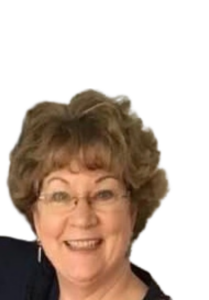
Laurie Vairetta
Laurie has served as a Williamson County CASA advocate for nearly five years. Since becoming an advocate in October 2021, she has worked 24 cases, completed nearly 100 hours of continuing education and driven more than 4,200 miles in service of children and families. She also serves in the Wrap Around Ministry at Church of the City and as a volunteer with the African American Heritage Society.
I serve as a CASA because of my desire to help vulnerable families in a practical and measurable way. Local service has always been important to me, and the role of CASA allows me to use my life experience and skills to benefit children in my own community.
One of my most rewarding experiences actually happened years after a case had closed.
I was shopping in a local store when a woman approached me. She was the adoptive mother from one of my previous CASA cases, and she remembered me and the role CASA had played in her family’s story.
I had served as the CASA for a sibling group from the beginning of their case. I watched their journey move from a kinship placement, to foster care, and ultimately to the home of this woman and her husband, who chose to foster and then adopt the children.
I had the privilege of attending their adoption at Chancery Court and later celebrating with their family at their church.
Running into their mother years later was such a meaningful reminder that even after a CASA case officially closes, the story continues. It was incredibly special to see a family whose life I had been privileged to witness during such an important season.
The most challenging part is working with families who may not understand the importance of creating a stable and secure home for their children.
Financial insecurity, relational instability, addiction and family dysfunction can all have a profound impact on children. It can be difficult when the adults involved don’t fully recognize how those circumstances are affecting them.
I would encourage anyone who thinks they might be interested to meet with a current advocate and learn more.
I still don’t always feel 100 percent “qualified,” even after nearly five years, because every case is unique! But that’s also something I want prospective advocates to understand: you aren’t expected to know everything.
There is tremendous support from our Advocate Supervisors and from other advocates when a situation arises that is unfamiliar or especially challenging. You have people to turn to.
And if someone believes in CASA’s mission but doesn’t feel called to serve as an advocate, I encourage them to visit our website and learn about other ways to support the organization, including giving financially.
My greatest joy is spending time with my two granddaughters, as well as enjoying time with family and friends and traveling.
Service is also an important part of my life outside of CASA. I serve with the Wrap Around Ministry at Church of the City and volunteer with the African American Heritage Society of Williamson County.
To learn more about our work at WCCASA, go here.


A Q&A series with Williamson County CASA board members and advocates, to learn more about why they support our organization.
Chandler Farmer is the current President of the WCCASA board and an attorney at Thompson Burton. He and his family are long-time CASA supporters.
CASA is personal for me. My mom has served as a CASA volunteer for more than 14 years (editor’s note: Tracy Farmer was just named 2026 CASA Volunteer of the Year by the TBA), so I spent years watching her pour into the lives of children who needed someone in their corner. I saw firsthand the difference a single, steady advocate can make for a child going through one of the hardest seasons of their life. That left a lasting impression on me.
Then, early in my legal career, I had the privilege of clerking for the Tennessee Court of Appeals. During that time, I worked on several cases involving dependent and neglected children, and I saw from the judicial side just how vital CASA volunteers are. Their reports matter enormously when a judge is making decisions that will shape a child’s future. Between my mom’s example and my own professional experience, joining the board felt like a natural way to give back to a mission I believe in wholeheartedly.
I wish more people understood how many children right here in Williamson County need an advocate. This isn’t a faraway problem — it’s happening in our own community, and every one of these children deserves someone who shows up for them consistently and fights for their best interests.
What surprised me most is the sheer scope of what a CASA volunteer takes on. Before I became involved at the board level, I understood the basics — that volunteers advocate for children in court. But the reality goes so much deeper than that. CASA volunteers show up at school meetings, check in on placements, research services, and make sure nothing falls through the cracks.
They often become the one constant in a child’s life during a time when everything else feels uncertain. The level of commitment our volunteers bring is truly extraordinary, and it’s all done on a volunteer basis.
There are many ways to support CASA beyond volunteering as an advocate. Spreading awareness of our mission among friends, family, and coworkers is a great first step. Financial contributions, no matter the size, also make a real difference in helping us train and support our advocates.
When I’m not working or serving on the CASA board, you’ll most likely find me with my family. My wife, Meg, and I have four young children, so life is busy — in a good way. I love helping coach their youth sports teams. Our family also loves exploring new places, so whenever we get the chance to travel and experience something new together, we take it.
To learn more about our work at WCCASA, go here.

A Q&A series with Williamson County CASA board members and advocates, to learn more about why they support our organization.
Alyssa Maeson is a current WCCASA advocate, and the wife of Matt Maeson – the Platinum artist performing at our 2026 Voices for Children fundraising event on May 7, 2026.
Continue reading

A Q&A series with Williamson County CASA board members and advocates, to learn more about why they support our organization.
Cecil Brown is the current Vice President of the WCCASA board, and Director of Inclusion and Engagement at Jackson – the title sponsor for our 2026 Voices for Children fundraising event.
I wish more people understood that children do not choose to be in foster care — circumstances beyond their control bring them there. Most of these children love their families deeply, but difficult situations lead to separation. CASA ensures that each child’s best interests, well-being, and personal wishes are always considered.
My family has experienced this firsthand. We were foster parents to my son, Christopher, after he was left at daycare. He was assigned a CASA volunteer who checked on him regularly and advocated for his needs. Ultimately, we welcomed him into our family. Today, Christopher is 23 years old, serving in the U.S. Army National Guard and coaching football at his former high school. I am deeply grateful that he had a CASA volunteer supporting him during that critical time.
What surprised me most is how much of CASA’s work happens quietly, behind the scenes. Because CASA serves children in foster care, much of the work is confidential and not widely visible to the public. CASA volunteers often make long-term commitments, staying with a child until they are placed in a safe, permanent home. In some cases, those relationships continue well into adulthood. I am continually inspired by the stories of volunteers who go above and beyond to protect and support vulnerable children.
I chose CASA because I have seen firsthand the impact it has on the lives of children. In 2000, my former wife served as a CASA Supervisor in San Antonio, Texas. Through her work, I quickly realized that a CASA volunteer is often the one constant presence in a child’s life when they are removed from their home — someone who can be their voice, their advocate, and their source of comfort. CASA volunteers play a vital role in ensuring the best possible outcomes for a child’s long-term well-being.
I also completed the Jackson Board Corp. training program, which prepares participants to serve on nonprofit boards. When I graduated, CASA was my top choice among the three organizations I considered.
If you’re unable to volunteer, please consider supporting CASA in other ways. As a nonprofit organization, CASA depends on the generosity of local community members to help give children a voice. Donations, advocacy, and spread awareness all make a meaningful difference.
Outside of CASA, I enjoy traveling with my wife, Stephanie, staying active in our local church, and playing golf whenever I can.
To learn more about our work at WCCASA, go here.